
- By: Editor
- April 14, 2026
- 0 Comments
Nowadays, many people face breathing challenges like shortness of breath, low oxygen levels, or difficulty performing daily activities due to respiratory issues. To provide oxygen support in hospitals, emergencies, and home care, oxygen cylinders are an essential tool.
In this blog, we will help you understand how oxygen cylinders work, their types, and safe usage, so you can make an informed decision.
Types of Oxygen Cylinders
Let’s begin with basic information, like types of oxygen cylinders used in hospitals and homes. Oxygen cylinders come in different types to meet varying medical and personal needs.
Portable Oxygen Cylinders
This type of medical oxygen cylinder is lightweight and is ideal for patients who need supplemental oxygen while traveling or moving around. A portable oxygen cylinder is usually small, easy to carry, and convenient for short-term or emergency use.
Stationary Oxygen Cylinders
Stationary cylinders provide a continuous oxygen supply for patients requiring long-term therapy at home or in the hospital. They are heavier and kept in a fixed position due to their size and weight.
Medical-Grade vs Industrial-Grade
Another thing you must know before purchasing an oxygen cylinder is whether it’s safe to use for medical purposes or not. Medical-grade oxygen cylinders are strictly regulated for safe human use. On the other hand, industrial-grade cylinders contain oxygen for non-medical purposes and should never be used for patients.
Components of Oxygen Cylinders
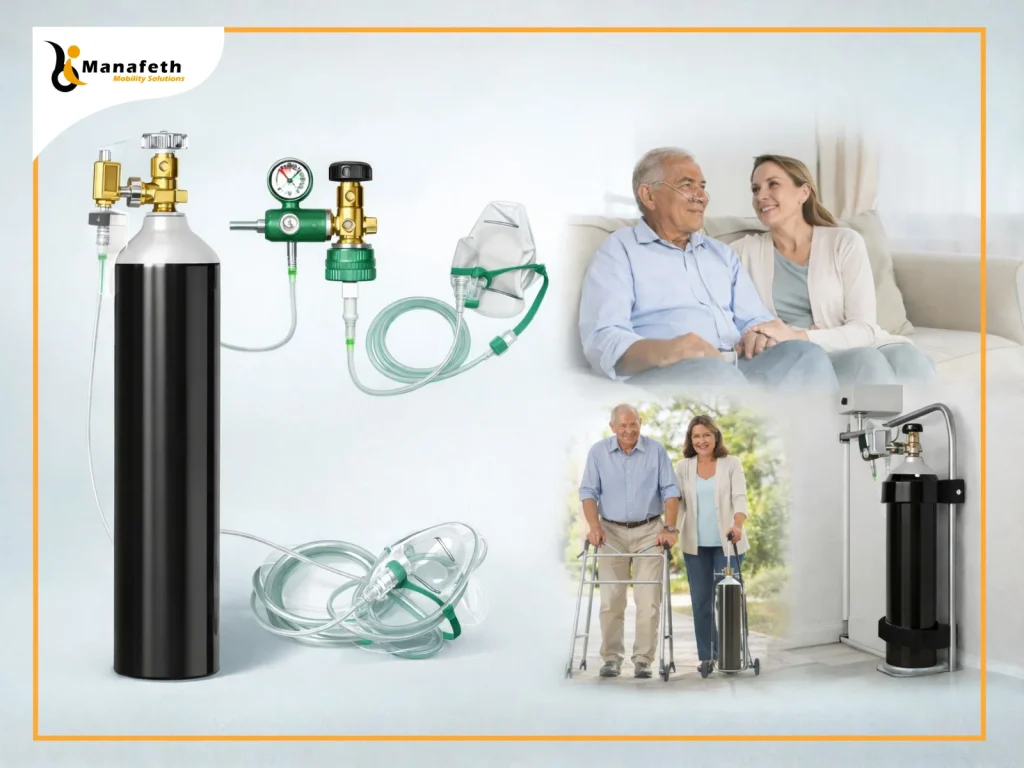
An oxygen cylinder is made up of several important parts that ensure safe and effective delivery of oxygen to patients as per their requirement. Oxygen Cylinder parts are mentioned below:
Cylinder Body
The first thing you see of an oxygen cylinder is its body. This main container holds compressed oxygen gas under high pressure. Cylinders are made of aluminum or steel for durability and strength.
Valve and Regulator
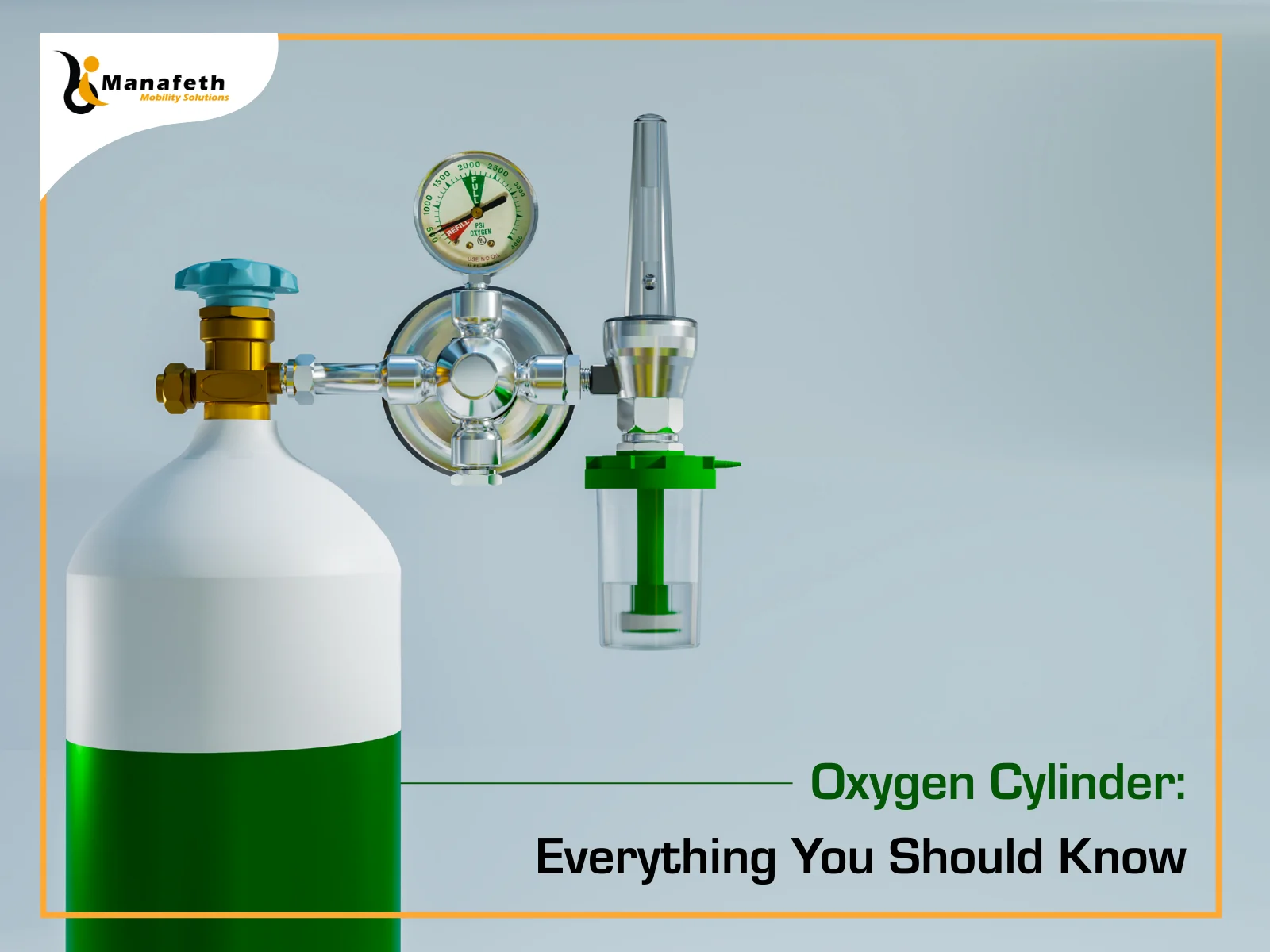
The valve is another important part of cylinder. It controls the flow of oxygen from the cylinder, while the regulator adjusts the flow rate to match the patient’s needs. The latest oxygen cylinder from Manafeth Mobility Solutions has a regulator with a pressure gauge to monitor oxygen levels.
Humidifier Bottle (Optional)
Some oxygen cylinders include a humidifier bottle that adds moisture to the oxygen. It prevents dryness in the nose and throat during prolonged use.
Tubing and Mask/Nasal Cannula
Oxygen is delivered to the patient through tubing connected to a mask or nasal cannula. This ensures oxygen reaches the lungs efficiently.
Safety Precautions
Oxygen is highly flammable and stored under high pressure. That’s why using oxygen cylinders safely is critical.
- Keep Away from Flames: It is best to never use oxygen near open flames, cigarettes, or heat sources.
- Proper Storage: You need to store cylinders upright in a well-ventilated area. While storing, avoid direct sunlight or hot surfaces.
- Secure the Cylinder: To prevent tipping or falling, you must use a cylinder stand or holder.
- Check for Leaks: Regularly inspecting valves, tubing, and connectors for leaks is necessary. If you are looking for professional technicians who can do regular checks for your oxygen cylinder, Manafeth is your go-to option. We offer free maintenance for oxygen cylinders across the UAE.
- Follow Medical Instructions: Always use the flow rate prescribed by your healthcare provider.
- Avoid Oils and Grease: Do not use oil, grease, or other flammable substances near the cylinder.
Usage of Oxygen Cylinders
Now the question is when to use an oxygen cylinder. Oxygen cylinders can be used in several ways depending on the patient’s needs.
Emergency Situations
They can be used in hospitals, ambulances, or at home. Oxygen cylinders provide quick oxygen support during respiratory distress or sudden drops in oxygen levels.
Home Oxygen Therapy
For patients who require oxygen support but can not stay at medical facility for long, they shift to their home and need support there. Oxygen cylinders for sale at Manafeth can provide a reliable source of oxygen to them, especially in cases where electricity is unavailable or during travel.
Continuous or Intermittent Use
Depending on your medical needs, oxygen cylinders can be used for continuous oxygen supply or for short periods during sleep, exercise, or episodes of breathlessness.
Travel and Mobility
For patients who want to move freely while maintaining their oxygen therapy, portable oxygen cylinders are best option. They are commonly used for short trips, outdoor activities, or hospital visits.
What health conditions requires and Oxygen Cylinder?
Oxygen cylinders can help with many conditions, including:
- Sleep apnea
- Lung cancer
- Pneumonia
- Cystic fibrosis
- Pulmonary fibrosis
- Congestive heart failure
- Chronic bronchitis
- Asthma
Conclusion
An oxygen cylinder is an important part of respiratory care for patients of all ages. After knowing the types, components, and safe usage practices, patients and caregivers can manage oxygen therapy effectively. Whether you need oxygen concentrators for long-term home use or oxygen cylinders for portability and immediate oxygen support in emergencies, you can rely on trusted supplier like Manafeth Mobility Solutions. Always consult a healthcare professional before starting oxygen therapy to ensure the correct type and flow rate for your needs.