- By: Rabia
- أغسطس 18, 2026
- 0 Comments
Going through surgery, whether a small one or a complex one, is a big moment in the health journey of a person. Nevertheless, the rehabilitation period is equally or even more difficult. Mobility difficulties are an ordinary problem that impacts both the physical recovery and mental state of a patient. Even simple things like moving around the rooms, getting out of bed, and going to the bathroom turn into a challenge for a patient. Assistive devices and mobility solutions have developed to make this important process of recovery easier for people.
In this article, we will explain what type of aid should be used by a person for surgery recovery and why.
How Do Mobility Devices Help To Recover After Surgery?
The first few weeks following any kind of operation tend to make simple movements difficult. Moving from the bed, going to the bathroom, or even around the house may be hard for the patient until he/she fully recovers from the operation. This is where mobility devices can be of great help to a patient. Not only do they make movements easy, but they also minimize pressure on the wound or the area affected.
With the help of mobility devices like crutches, walking sticks, walking frames and even a wheelchair, the patient can move around independently without being overworked physically. Safety during movement is a very important factor during the treatment since it helps maintain good circulation, prevents stiffness and joint inflexibility and also reduces the risk of having another injury. The most important part is that mobility devices help patients feel safe during movement.
Essential Mobility Aids for Surgery Recovery
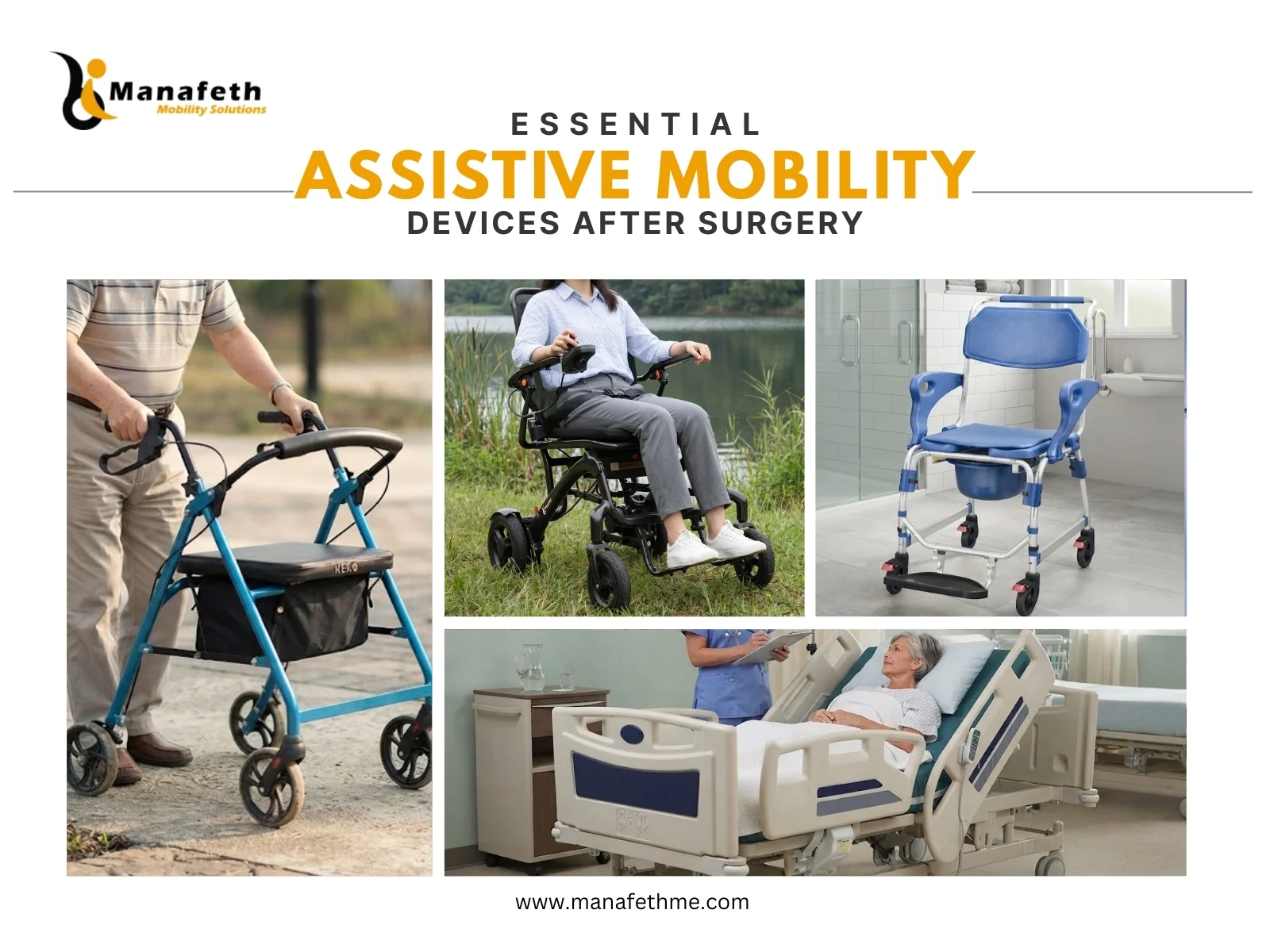
Hospital Beds
Rest is one of the important aspects of rehabilitation, and therefore, an adjustable hospital bed helps make the process more comfortable. With this type of bed, a patient can easily change positions, get into or out of bed, and minimize pressure on the body as it heals.
Walkers
Due to a lack of stability when walking immediately after an operation, patients need a walker. It helps in balancing and supporting a person with limited mobility when walking while easing the pressure from the operated leg, hip, knee, or back.
Shower Commode Chairs
After your surgery, it is difficult to take a bath or use the bathroom. A shower commode chair provides you with a safe place to sit that reduces the possibility of falls when bathing.
Wheelchairs
In some cases, the surgery requires that the patient does not apply any pressure on the part of the body affected by the surgery for a few weeks. In such cases, wheelchairs come in handy as they enable the patient to get around safely and comfortably without hampering their recovery process. For medical surgery patients, wheelchair rental in Dubai is the best option because they need a short-term mobility solution.
Patient transfer chairs
Transferring from a bed to a chair, wheelchair, or toilet can be hard not only for the patient but for the caregiver. Patient transfer chairs ensure safe transfers and also reduce the chance of falling or putting strain on the care provider in moving the patient.
Necessary Daily Living Aids After Surgery
Grab Bars
Routine activities such as getting up from the toilet and entering the shower can become unsafe after surgical procedures. The use of grab bars ensures that patients have something to hold onto, which enables them to keep their balance.
Walkers
The use of walkers gives patients additional stability as they attempt to move around during the beginning stage of their recovery period. Using a walker allows them to move around without putting undue stress on their body.
Bedside rails
The process of going in and out of bed becomes one of the most difficult actions that patients face after surgery. Having bedside rails will give additional security and will make these movements easier and less stressful for the patient’s body.
FAQs:
What walking aids are used after surgery?
Walking aids that are used post-surgery consist of walking frames, crutches, and walking sticks. These aids will allow you to walk safely and will reduce pressure from your injured leg.
What is the most common assistive device after surgery?
The walker, in particular the front-wheeled walker, is the most commonly used and prescribed assistive device after surgery on the legs or joints.
Do you need a special chair after Post-Surgery?
Yes, in many instances, there is a special chair that can help make recovery more secure and comfortable. This chair ensures that there is better support when one sits or stands.
How long do you need help after hip replacement surgery?
You need help for about 6 weeks after hip replacement surgery.